
The Advent of the Subway in Japan
The first full-fledged subway in Japan opened in 1927. It was the line operated by Tokyo Underground Railway Co., Ltd. between Ueno and Asakusa (approximately 2.2 km). At a time when steam locomotives were still the dominant form of transportation, the company developed the Type 1000 electric train for underground use.
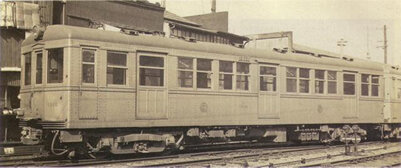
【Type 1000 Electric Train】
Route Expansion
In 1933, the Midosuji Line of the Osaka Municipal Subway opened between Umeda and Shinsaibashi as Japan's first publicly operated subway. From that point onward, subways in Japan continued to expand and open new lines in step with urban development, with growth centered on Tokyo, Osaka, and Nagoya in the 1950s and 60s before spreading to regional hub cities.
Today, subways serve as an indispensable part of transportation infrastructure for urban activity, with a total route length of 851.5 km from Hokkaido to Kyushu, reaching 15.35 million passengers per day (FY 2023 figures).
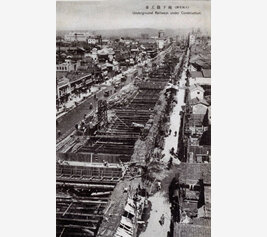
【Subway Construction in the Early Showa Period】
Regularity and High Speed
Unaffected by severe weather such as typhoons, subways excel in regularity of service and, because they can travel between destinations without being subject to road traffic conditions, are also a high-speed mode of transportation.
Safety
With no risk of contact with pedestrians or road vehicles, and with advanced operation management systems such as ATC (Automatic Train Control) increasingly in place, subways have a low accident rate and are a safe mode of transportation.
Consideration for the Environment
The CO2 emissions generated by railways, including subways, to carry one passenger one kilometer are roughly one-eighth those of a private automobile, making them an environmentally-friendly mode of transportation.
However, because subways require specialized construction methods, initial construction costs are high, and daily inspection and maintenance demand considerable labor, meaning subways are only feasible in large urban centers where sufficient ridership can be expected.
Nationwide Interoperability of Transit IC Cards
Automated ticket gates have been installed at subways nationwide, allowing major transit IC cards such as Suica and PASMO to be used interchangeably. Pay-later boarding services using contactless credit card and debit card payments have also been expanding in recent years.
Subway Construction
Extension work currently underway covers two lines operated by Tokyo Metro Co., Ltd., the Yurakucho Line (Toyosu to Sumiyoshi) and the Namboku Line (Shinagawa to Shirokane-Takanawa), with service on both extensions scheduled to begin in the mid-2030s.
| City Name | Number of Lines Main Line Names | Route Distance (After Extension) | 2018 Passenger Numbers (1000 Passengers per Day) | Main Transport Pass | Start Date of Operation | |
|---|---|---|---|---|---|---|
 | Sapporo |
3 Main Lines |
48.0km |
629 | SAPICA | 1971.12 |
 | Sendai | 2 Main Lines Namboku Line (North - South), Tozai Line (East - West) | 28.7km | 249 | icsca | 1986.7 |
 | Tokyo Metropolitan Area (Tokyo Metro) | 4 Main Lines Asakusa Line, Mita Line, Shinjuku Line, Oedo Line | 109.0km | 2,821 | PASMO | 1960.12 |
 | Yokohama | 2 Main Lines Blue Line, Green Line | 53.4km | 670 | PASMO | 1971.12 |
 | Nagoya | 6 Main Lines Including: Higashiyama Line, Meijo Line, and others | 93.3km | 1,336 | manaca | 1957.11 |
 | Kyoto | 2 Main Lines Karasuma Line, Tozai Line | 31.2km | 397 | PiTaPa | 1981.5 |
 | Kobe | 2 Main Lines Seishin Line, Yamate Line, Hokushin Line, Kaigan Line | 38.1km | 314 | PiTaPa | 1977.3 |
 | Fukuoka | 3 Main Lines Airport Line, Hakozaki Line, Nanakuma Line | 29.8km (31.4km) | 470 | Hayakaken | 1981.7 |
| City Name | Number of Lines Main Line Names | Route Distance (After Extension) | 2018 Passenger Numbers (1000 Passengers per Day) | Main Transport Pass | Start Date of Operation | |
|---|---|---|---|---|---|---|
 | Tokyo Metro | 9 Main Lines Ginza Line, Marunouchi Line, Hibiya Line, and others |
195.0km |
7,579 | PASMO |
1927.12 |
 | Osaka Metro | 8 Main Lines Midosuji Line, Tanimachi Line, Sakaisuji Line, and others | 137.8km | 2,559 | PiTaPa | 1933.5 |
 | Hokuso Railway | 1 Main Line Hokuso Railway Line | 32.3km | 106 | PASMO | 1991.3 |
 | Saitama Rapid Railway | 1 Main Line Saitama Rapid Railway Line | 14.6km | 118 | PASMO | 2001.3 |
 | Toyo Rapid Railway | 1 Main Line Toyo Express Line | 16.2km | 157 | PASMO | 1996.4 |
 | Hiroshima Rapid Transit | 1 Main Line Astram Line | 18.4km | 65 | PASPY | 1994.8 |
 | Yokohama Rapid Railway | 1 Main Line Minatomirai Line | 4.1km | 217 | PASMO | 2004.2 |
 | Metropolitan Intercity Railway | 1 Main Line TSUKUBA EXPRESS LINE | 58.3 km | 403 | PASMO | 2005.8 |